Let’s be honest, cybersecurity can feel like a treadmill that never slows down. New threats pop up constantly, and the time between a vulnerability being discovered and someone actively exploiting it keeps shrinking. NIST has flagged this directly in their guidance, and if you’ve been in IT for any length of time, you’ve probably felt it firsthand.
The old approach of patching things when you get around to it just doesn’t cut it anymore. What you need is a system — a repeatable, ongoing process that keeps you on top of risks before they become incidents. That’s the whole idea behind the Vulnerability Management Lifecycle.
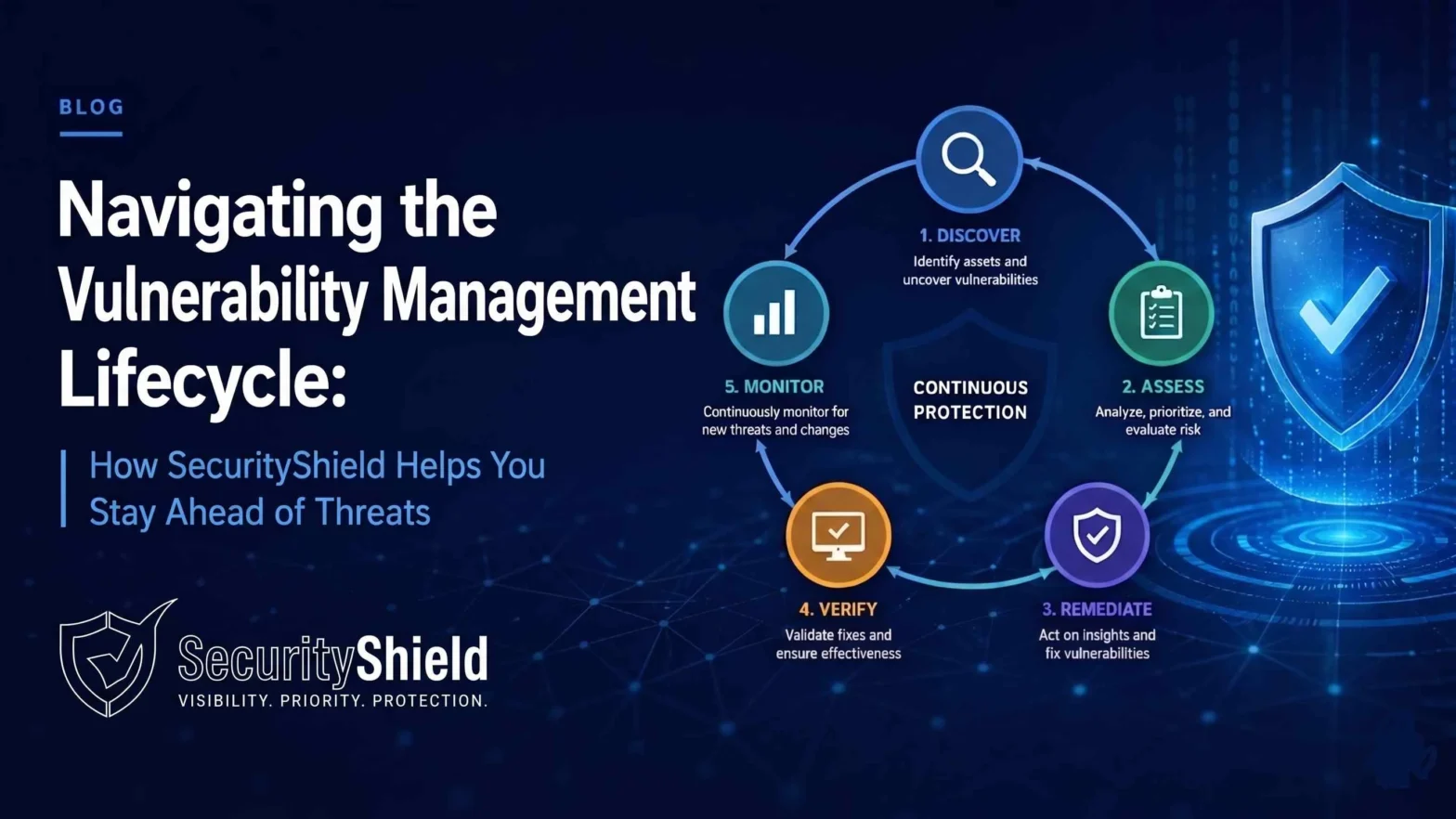
Think of it as five connected steps that loop back on each other continuously:
First, you need to know what you have. Sounds obvious, but plenty of organizations are surprised by what’s sitting on their network. You can’t protect what you don’t know about—servers, workstations, cloud instances —all of it needs to be on your radar.
From there, it’s about figuring out what actually matters. Not every vulnerability is worth losing sleep over. The ones that deserve your immediate attention are the ones attackers are already using. CISA actually maintains a running list of these “Known Exploited Vulnerabilities” — it’s a great place to start when you’re triaging.
Once you know what to fix, you fix it. Sometimes that’s a patch, sometimes it’s a configuration change, and occasionally it means isolating a system while you figure out a longer-term solution. The key is having a process that scales — because the volume of updates and patches these days is relentless.
After you remediate, don’t just assume it worked. Rescan. Verify. Make sure the fix didn’t create a new problem somewhere else.
And finally, document everything and keep watching. Compliance teams will thank you, and you’ll catch the next wave of vulnerabilities before they catch you.
Most organizations run into trouble because they’re juggling too many disconnected tools. SecurityShield brings it all together in one place.
The core platform — SecurityShield-TVM — handles real-time scanning and prioritization automatically. Instead of drowning in thousands of alerts, your team focuses on the vulnerabilities that actually represent meaningful risk. In practice, this tends to free up a significant chunk of IT time that was previously spent chasing noise.
It works across Windows, Linux, and macOS, so if you’re managing a mixed environment (and most people are), you get a single, clear picture rather than having to reconcile data from multiple dashboards.
SecurityShield-DLP layers on top of that by tracking where your sensitive data actually lives and putting zero-trust protections around it. Most deployments are up and running in under a week. It also covers your bases for regulatory compliance — HIPAA, CMMC, GDPR — which saves a lot of scrambling come audit time.
Then there’s SecurityShield-DWS, which monitors the dark web for compromised credentials tied to your organization. This one’s underrated — by the time credentials show up in a breach dump, it’s often too late. Getting that early warning gives you a real shot at containing the damage before ransomware or account takeovers become your problem.
Here’s something that doesn’t get talked about enough. Even organizations with solid vulnerability management programs get burned by configuration issues — a password policy that wasn’t enforced everywhere, a setting that got changed during an update. Over time, small gaps add up.
SecureTrust addresses this through continuous policy validation, automated checks against your actual environment, and comparisons against standards such as the CIS Benchmarks. If something has drifted from where it should be, you know about it before an auditor — or an attacker — finds it first.
Managing vulnerabilities isn’t a project you complete; it’s something you build into how you operate. The good news is it doesn’t have to be overwhelming. With the right platform doing the heavy lifting — scanning, prioritizing, alerting, validating — your team can actually stay ahead of the curve instead of constantly reacting to it.
If you want to see how it works in practice, SecurityShield offers a free trial. It’s worth a look before the next threat decides to test your defenses for you.