This is Part 2 of a 2-part series. Read Part 1: The DOJ Is Coming for Healthcare Fraud — Is Your Sanctions Screening Ready?
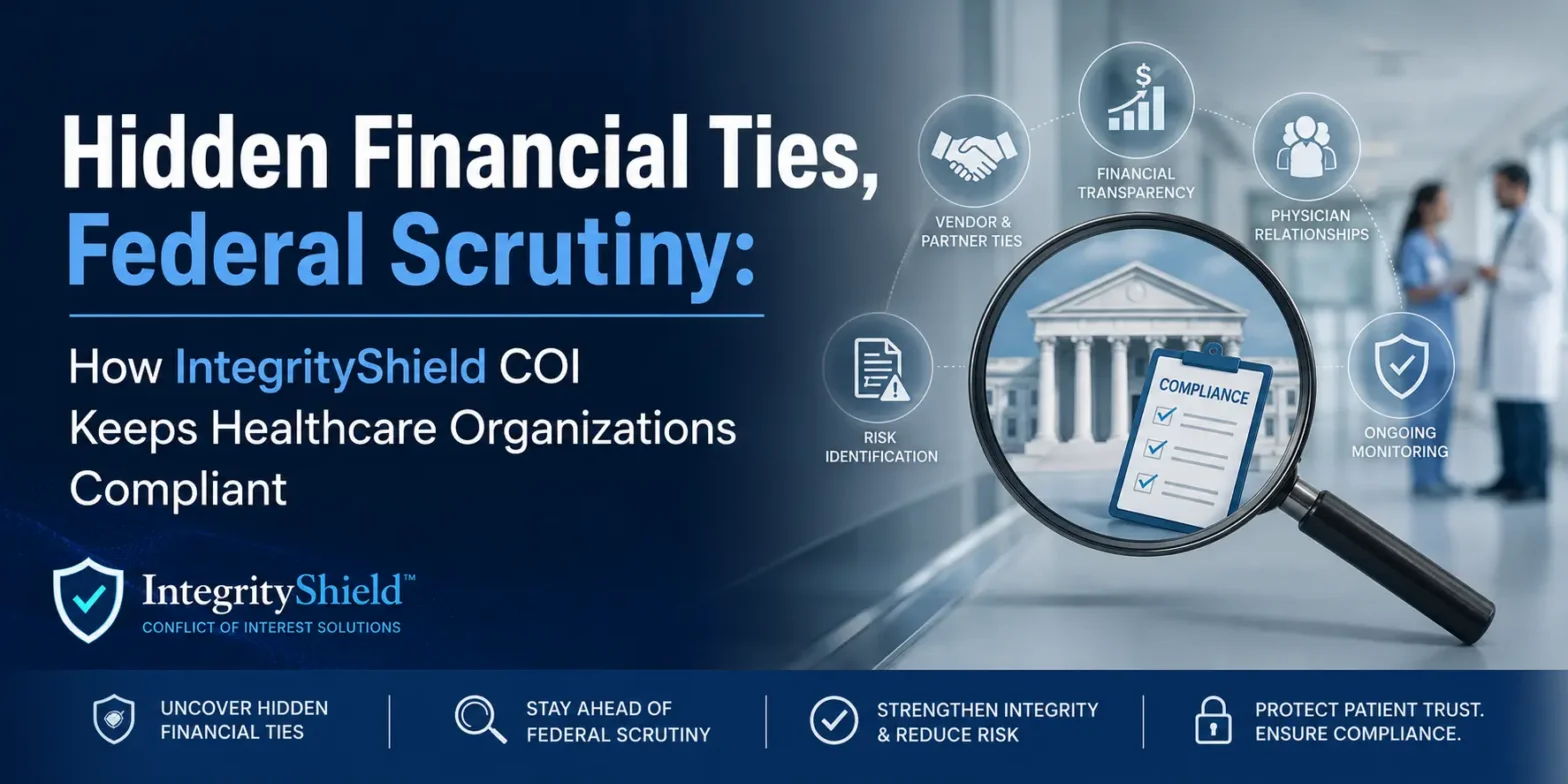
The DOJ West Coast Strike Force is not limited to billing fraud. It actively targets the hidden financial relationships between vendors and healthcare practitioners that can corrupt clinical decision-making and drain taxpayer dollars.
In the April 2026 press conference announcing the Strike Force, Assistant Attorney General Colin McDonald made the government’s strategy clear: “We will use data analytics, cross-district regional coordination, and every available legal tool to identify, investigate, and prosecute these crimes with speed and efficiency.” The Strike Force explicitly uses advanced data mining to cross-reference provider relationships. As AAG McDonald warned organizations in Arizona, Nevada, and California: “We will be knocking on your door soon.”
The evidence is mounting. In Arizona, the DOJ charged a $650 million Medicaid fraud scheme that exploited vulnerable substance abuse patients, with kickbacks as a central element. In Nevada, hospice and behavioral health investigations have exposed systematic kickback arrangements. These cases reflect a nationwide enforcement shift: federal agencies now prioritize undisclosed financial ties that influence prescribing, referrals, and purchasing decisions.
Key message: If your organization still relies on manual COI processes, you operate blind in an environment where federal investigators see your gaps first, thanks to the same public data sources you could be using proactively.
A conflict of interest arises when financial relationships between supply chain vendors and credentialed practitioners could inappropriately influence clinical or business decisions. Common examples include consulting fees from device manufacturers to prescribing physicians, speaking honoraria from pharmaceutical companies, research grants, ownership stakes, and royalty payments.
Undisclosed or poorly managed ties create serious legal exposure. Even when care remains medically appropriate, a physician receiving payments from a vendor while referring patients for that vendor’s products can violate federal law. For organizations, these conflicts expose hospitals and systems to cascading risks when they contract with vendors who have hidden relationships with their credentialed staff.
Federal laws create a complex web designed to prevent financial conflicts from undermining medical decisions. Violations carry steep penalties, including fines, excluded claims, and program exclusion.
Annual disclosure forms, spreadsheets, and periodic audits cannot keep pace with today’s enforcement tools. The CMS Open Payments database alone holds millions of records, while a typical mid-sized health system manages hundreds of vendors and thousands of practitioners with constantly evolving relationships.
Federal agencies now combine Open Payments data with claims, enrollment files, and other sources using AI and algorithms to surface suspect ties faster than most compliance teams can review them. The DOJ Strike Force explicitly relies on this data analytics approach. This creates a dangerous asymmetry: regulators often spot your risks before you do.
IntegrityShield COI is purpose-built software that automates the detection of financial relationships between your vendors and credentialed practitioners.
Core Capabilities
How IntegrityShield COI Detects Relationships
Supported Frameworks IntegrityShield COI directly supports compliance across the seven key areas: Stark Law, Anti-Kickback Statute, Physician Payments Sunshine Act, False Claims Act, Civil Monetary Penalties Law, Federal Conflict of Interest Statutes, and HRSA Conflict of Interest Policy.
When a Suspect Case Is Identified: the platform automatically routes cases into a structured workflow:
The DOJ West Coast Strike Force announcement is a clear signal. Data analytics now powers enforcement, and the government’s tools outpace manual processes. Organizations that wait for investigators to “knock on the door” face massive settlements, often tens or hundreds of millions under the False Claims Act.
Key Takeaways
Healthcare compliance has changed. Manual methods are no longer sufficient. They are a liability. Automated, data-driven COI management turns compliance into a proactive advantage that protects your organization, patients, and mission.
Take Action: Start Your IntegrityShield COI Free Trial Today: The Strike Force is active. Federal investigators are already cross-referencing provider relationships using public data. Do not wait for them to find your gaps first.
IntegrityShield COI gives you automated detection, streamlined workflows, and complete audit documentation, leveraging the same CMS Open Payments data that enforcement teams use.
Start your free trial today and move from reactive compliance to strategic confidence.
Related Resources
References [1] U.S. Department of Justice. (2026, April 30). Fraud Division Launches West Coast Strike Force… [Video]. YouTube. [2] U.S. Department of Justice, Criminal Division. Health Care Fraud Unit. [3] Centers for Medicare & Medicaid Services. Open Payments. [4] Centers for Medicare & Medicaid Services. Physician Self-Referral (Stark Law). [5] U.S. Department of Health and Human Services, Office of Inspector General. Compliance Guidance. [6] U.S. Department of Justice. 2025 National Health Care Fraud Takedown.